Few corners of London offer quite the same sense of occasion — and theatre — as Covent Garden. Here, the past and present mix and mingle. Actors hurry through stage doors, independent boutiques emerge alongside historic arcades, and just beyond the Piazza, the Strand unfolds with a quiet authority built over the centuries. Here, Simpson’s has held court since the 19th century; both witness to and participant in the life of the neighbourhood.
When you join us for breakfast, lunch, dinner, or even cocktails, perhaps we can tempt you to linger? Here is our essential guide to Covent Garden.
The Piazza: A Stage in Its Own Right
Covent Garden has always been a place to see and be seen, and that is unlikely to ever change. At its heart lies the Piazza, a place that has never quite relinquished its sense of theatre. Street performers draw large, enthusiastic crowds; the historic Market Building offers an appealing mix of boutiques and arcades; and the majestic façade of the Royal Opera House welcomes visitors from all over the world.
Covent Garden has its own choreography. It starts with a morning coffee and continues with a wander throughout the streets in the afternoon. The sunset is an unofficial signal that it’s almost time for the shows to start.
Theatreland & The Art of the Evening
As dusk settles, Covent Garden reveals another side of its character, when the West End comes alive.
For generations, the ritual has remained unchanged: a drink, perhaps a light supper, and then into the theatre. After curtain call, the theatregoers switch establishments, and at the area’s bars and restaurants, the evening tends to stretch on. It turns out there is always room for one more glass and one more story.
It is no coincidence that Simpson’s, which has long held an integral role in London’s cultural life, is a guardian of these traditions.
The Strand: London’s Grand Thoroughfare
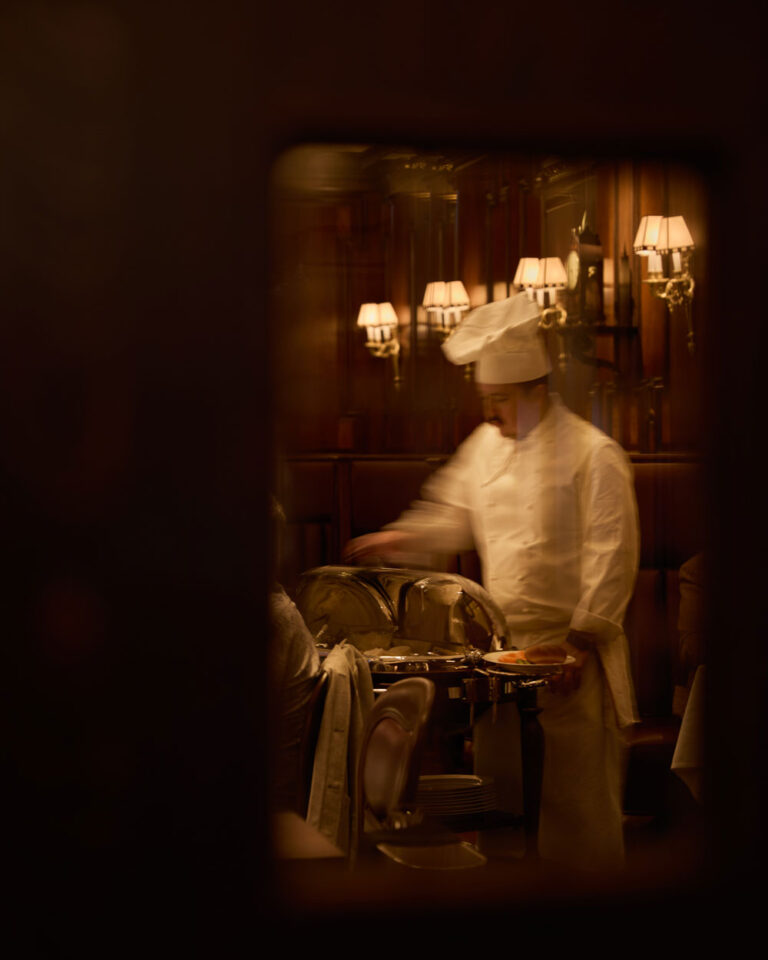
Step beyond the Piazza and the Strand reveals itself. Here, the story of Simpson’s began in 1828 as a coffee house and chess divan — a place of conversation, newspapers, and slow afternoons. It soon became known for its dining tradition: hearty English cooking served with a certain theatre of its own — most notably the carving trolley, devised so as not to disturb the concentration of chess players. Today, that sense of continuity remains. The Strand has changed, certainly, but not so much that one cannot still imagine Dickens or Doyle passing by.
Between Past and Present: Dining in Covent Garden
Covent Garden has always attracted appetites for culture, conversation, and dining. Yet what distinguishes it is not novelty alone, but its layered experiences.
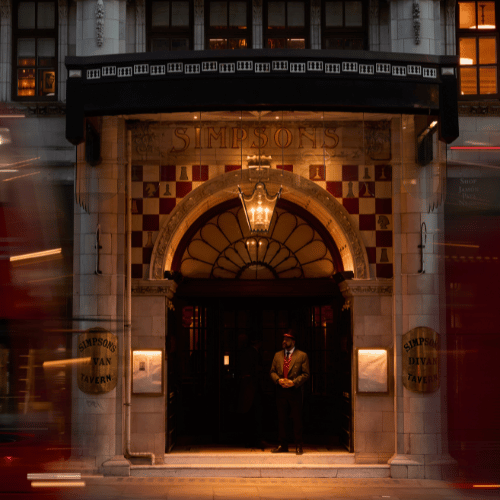
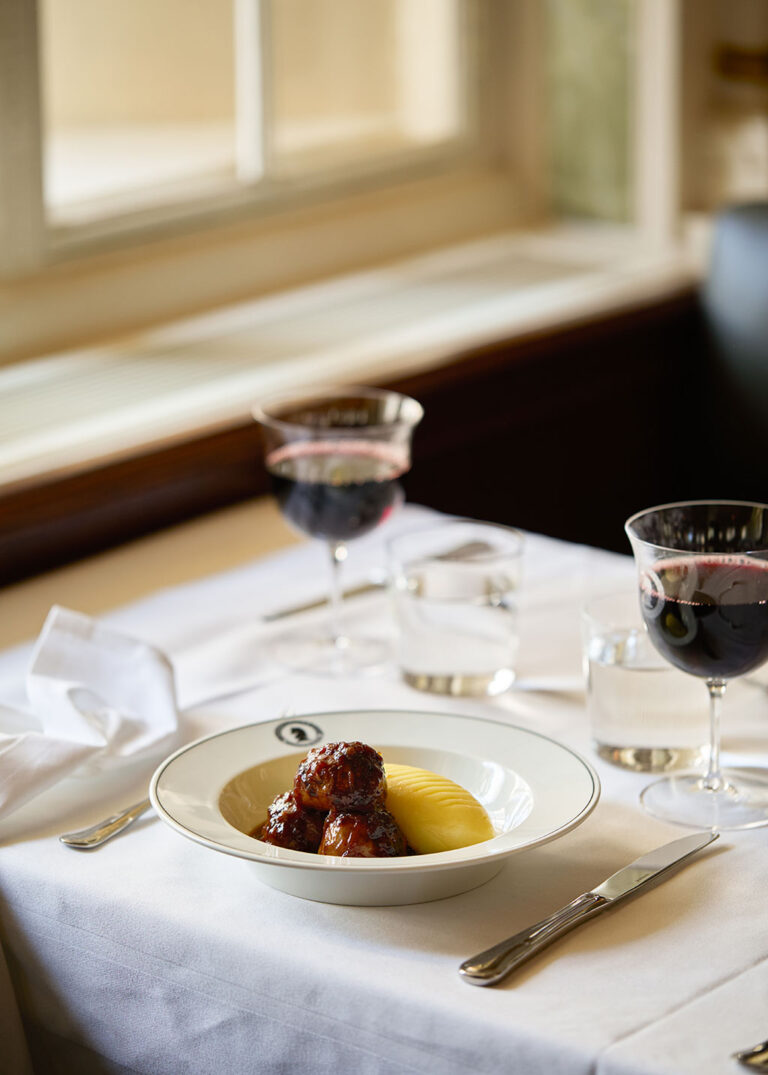
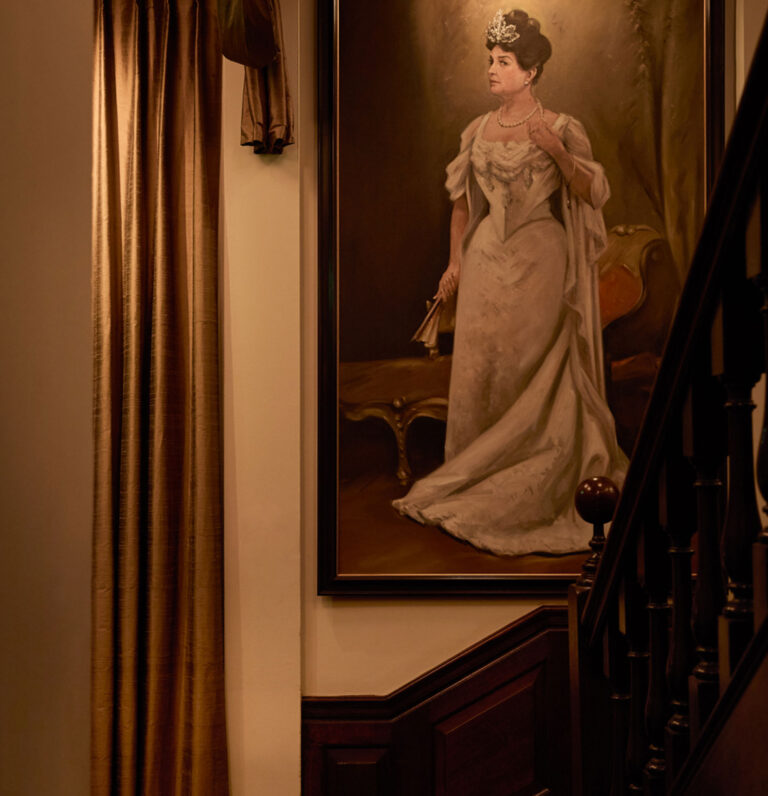
At Simpson’s, this is expressed across its spaces. The Grand Divan, its flagship offering, is a traditional English restaurant in a grand Edwardian dining room. Upstairs, discover the convivial ease of Romano’s, a Grand Café-style affair where the walls are lined with the faces of early-20th Century playwrights. Romano’s recalls the artistic salons of yesteryear — lively, sociable, and just a touch indulgent, with menus that shift with the seasons and a hum that carries from late morning into evening.
Bars hum quietly beneath and above, each with something a little different to offer. Simpson’s Bar was devised in the spirit and traditions of the Art Deco period, and Nellie’s Tavern was built for late nights.
In Conclusion…
It’s almost a folly to try to game-plan a trip to Covent Garden because in truth, it is best experienced without an agenda. Wander its streets, drop into its landmarks, and venture into its establishments. Ideally, buy tickets to a performance and either before or afterwards, linger over a meal at Simpson’s. And perhaps even a cocktail or three.